Australia is a country of extraordinary scale and diversity. Roughly the size of the continental United States but inhabited by just 26 million people, it contains some of the world's oldest geological formations, most biodiverse marine environments, and most fascinating urban cultures — often within a few hours of each other by air.
Planning a trip to Australia requires making genuine choices. The country is simply too large to see comprehensively in a single trip, and trying to do so often results in spending more time in airports than in the places you came to see. This guide is designed to help you understand the character of each major destination so you can make informed decisions about where your time — and your interests — will be best spent.
Sydney: The Harbour City
Sydney is the city most visitors picture when they think of Australia, and it rarely disappoints. Built around one of the world's great natural harbours, Sydney is a city of dramatic contrasts — colonial sandstone architecture alongside modernist landmarks, world-class beaches within half an hour of the central business district, and a food scene that draws heavily on its multicultural communities.
What Makes Sydney Distinctive
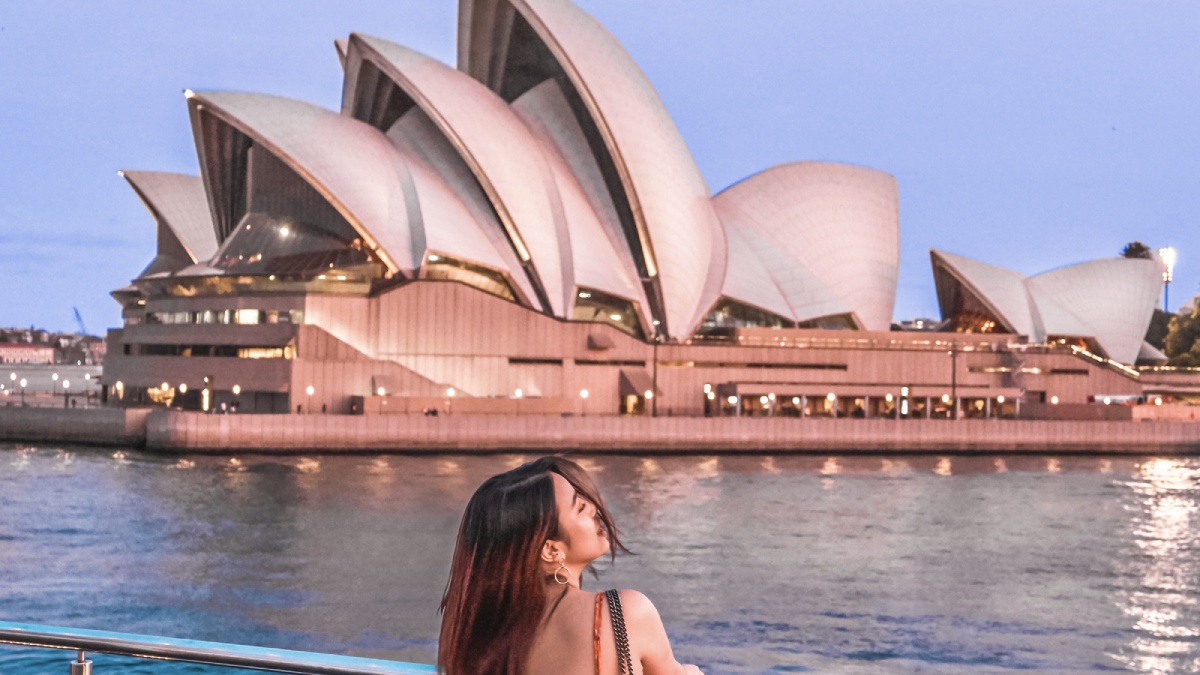
The Sydney Opera House, designed by Danish architect Jørn Utzon and completed in 1973, is arguably the most architecturally significant building in the Southern Hemisphere. It sits at the tip of Bennelong Point, perfectly framed by the Sydney Harbour Bridge — a combination that forms one of the world's most recognisable urban views. Both are best appreciated from the water, and a harbour ferry between Circular Quay and Manly provides that perspective for the cost of a transit ticket.
Beyond the icons, Sydney rewards exploration of its distinct neighbourhoods. Newtown and Glebe, southwest of the city centre, are home to independent bookshops, record stores, and some of Sydney's best casual dining. Surry Hills has evolved into one of Australia's most dynamic food and coffee precincts. Paddington's Victorian terrace houses and Bondi's beach culture offer two further, very different versions of Sydney life.
The harbour is not merely a backdrop to Sydney's life — it is the city's defining feature, shaping its geography, its culture, and its sense of itself.
Practical Notes for Visitors
Sydney is best visited between October and April, when temperatures are warm but rarely extreme. The summer months of December and January bring beach crowds but also Sydney's most vibrant outdoor festival calendar. The city's public transport network, while not comparable to London or Tokyo, is functional and covers the major visitor areas — the ferry network in particular is a genuine pleasure to use.
Melbourne: Culture, Coffee, and Creative Energy
Melbourne is regularly cited in international quality-of-life rankings and has a justified reputation as one of the world's most liveable cities. Where Sydney's identity is tied to its physical landscape — the harbour, the beaches, the headlands — Melbourne's character is built on its cultural institutions, its restaurant scene, and its deep investment in the arts.
The Laneways
Melbourne's most distinctive feature is its network of inner-city laneways — narrow pedestrian alleys that have evolved into some of the most interesting urban spaces in Australia. Hosier Lane is famous for its ever-changing street art, while Centre Place and Degraves Street are the heart of Melbourne's coffee culture, lined with espresso bars that take their craft with a seriousness that can seem almost theological.
This coffee culture is not incidental — Melbourne's Italian immigrant community in the postwar years brought espresso to Australia before it was common elsewhere in the English-speaking world, and the city has never relinquished its claim to the title of Australia's coffee capital. Arguing the merits of this claim with a Sydneysider will guarantee an animated conversation.
Cultural Institutions
The National Gallery of Victoria, the largest art museum in Australia, holds a permanent collection of international and Australian art spanning 4,000 years. The Ian Potter Centre: NGV Australia, on Federation Square, focuses specifically on Australian art and includes one of the most significant collections of Indigenous art outside specialist institutions. For live performance, the Arts Centre Melbourne presents a year-round programme across theatre, opera, and dance that rivals any comparable venue in the Asia-Pacific region.
The Great Barrier Reef: Marine Wonder of the World
Stretching for more than 2,300 kilometres along the Queensland coast, the Great Barrier Reef is the world's largest coral reef system — so large that it is visible from space. A UNESCO World Heritage Site since 1981, the reef encompasses more than 3,000 individual reef systems and coral cays, and provides habitat for an extraordinary range of marine life including over 1,500 species of fish, 4,000 species of mollusc, and six of the world's seven marine turtle species.
How to Approach the Reef
The main gateway to the reef is Cairns, a tropical city in Far North Queensland that serves as the primary hub for day trips and liveaboard dive expeditions. Port Douglas, an hour north of Cairns, is a smaller, quieter alternative with access to the Outer Reef and the Daintree Rainforest. The Whitsunday Islands, further south, offer a different experience — less dive-focused and more oriented toward sailing, snorkelling, and island exploration.
The question of reef health is one that visitors often raise, and it deserves an honest answer. The Great Barrier Reef has experienced significant coral bleaching events as a result of elevated ocean temperatures — a consequence of global warming that Australian marine scientists monitor closely. Certain sections of the reef have been more affected than others, and the Outer Reef generally shows healthier coral coverage than inshore areas. Visitors can expect to encounter extraordinary marine diversity even in areas that have experienced bleaching events, but it would be misleading to describe the reef today in exactly the same terms as a guide written twenty years ago.
Uluru: Sacred Country at Australia's Heart
Uluru rises 348 metres from the flat red plains of the Western Desert in Australia's Northern Territory. It is, by any measure, a remarkable geological formation — a massive inselberg of arkose sandstone whose visible bulk represents only a fraction of the rock below the surface. But Uluru is more than a geological landmark. It is the living heart of Anangu culture, a sacred site of profound spiritual significance to the Traditional Custodians who have inhabited this country for over 30,000 years.
Understanding Anangu Country
The Anangu people, the Traditional Custodians of Uluru and the surrounding Kata Tjuta National Park, have asked visitors not to climb Uluru — a request that was formally honoured when climbing was permanently prohibited in October 2019. Understanding why this matters requires some engagement with Anangu culture and belief. The routes used by climbers cross pathways of deep spiritual significance, and the Anangu are, in their own words, deeply saddened when visitors attempt to climb. The base walk — a 10.6-kilometre circuit around the entire monolith — offers a more intimate and appropriate engagement with the rock's extraordinary geology and the cave art that documents millennia of Anangu presence here.
Kata Tjuta, the collection of 36 domed rock formations 50 kilometres west of Uluru, is equally impressive and less crowded. The Valley of the Winds walk between the formations provides remarkable geological drama and is one of the most rewarding hikes in central Australia.
Tasmania: Australia's Wild Island
Tasmania — Australia's island state, separated from Victoria by the Bass Strait — contains more national park land per capita than any other Australian state. Approximately 42 percent of Tasmania's total land area is protected as national park, World Heritage Area, or nature reserve. The result is a landscape of remarkable ecological diversity, from the high dolerite peaks of the Central Highlands to the temperate rainforests of the south and the wild coastlines of the Tasman Peninsula.
The Overland Track
The Overland Track, stretching 65 kilometres through the heart of the Tasmanian Wilderness World Heritage Area, is widely regarded as one of Australia's great multi-day walks. Beginning at Cradle Mountain and ending at Lake St Clair (the deepest lake in Australia), the track traverses alpine moorland, buttongrass plains, and ancient forests over five to eight days depending on pace and side trip choices. It requires a permit and solid preparation, but provides an experience of genuine Tasmanian wilderness that is difficult to approximate any other way.
Hobart and the Huon Valley
Hobart, Tasmania's capital, has undergone a cultural transformation over the past decade. MONA — the Museum of Old and New Art, established in 2011 by the privately wealthy art collector David Walsh — has become one of the most talked-about art institutions in the country, drawing visitors who would not otherwise consider a trip to Tasmania. The Salamanca Market, held every Saturday morning along the old sandstone warehouses on Salamanca Place, is one of Australia's best outdoor markets, with local food producers, artists, and craftspeople offering genuinely distinctive Tasmanian products.
The Whitsundays: Island Sailing and White Silica Sand
The Whitsunday Islands — 74 islands scattered across the Coral Sea — represent one of the most immediately appealing landscapes in Australia. The combination of turquoise water, white sand, and green-forested islands creates a visual impression that photographs have made familiar, but that still surprises first-time visitors with its vividness in person.
Whitehaven Beach, accessible only by boat or seaplane from Airlie Beach, is consistently ranked among the world's best beaches. The sand is 98 percent pure silica — a composition that keeps it cool underfoot even in the hottest weather and gives it an unusual brightness that reads almost white in aerial photographs. The swirling patterns created by tidal movements in Hill Inlet, at the beach's northern end, produce one of the most photographed natural formations in Queensland.
Planning Your Time
The destinations covered in this guide represent a diverse cross-section of Australia's best-known travel experiences, but they span thousands of kilometres. Trying to include all of them in a two-week trip would mean spending more time in transit than in any individual place — which is generally not a satisfying way to travel.
For first-time visitors with two weeks, a practical approach is to anchor around two or three destinations that are geographically connected. Sydney, Melbourne, and Tasmania form a logical southeastern itinerary. Queensland's tropical north — Cairns, the reef, the Daintree, and the Whitsundays — makes a complementary and very different journey. Uluru works well as a standalone extension from either Sydney or Melbourne, given its central location and the relative ease of reaching it by air.
Australia rewards slow travel. The country's most distinctive experiences often emerge not from the headline landmarks but from the quieter moments between them — a conversation with a sheep farmer in regional New South Wales, an unexpected waterhole encountered on a walk in the Red Centre, a morning spent watching little penguins return to their burrows on Phillip Island at dusk. Building time for those moments into your itinerary is, in the end, the most valuable kind of planning you can do.